

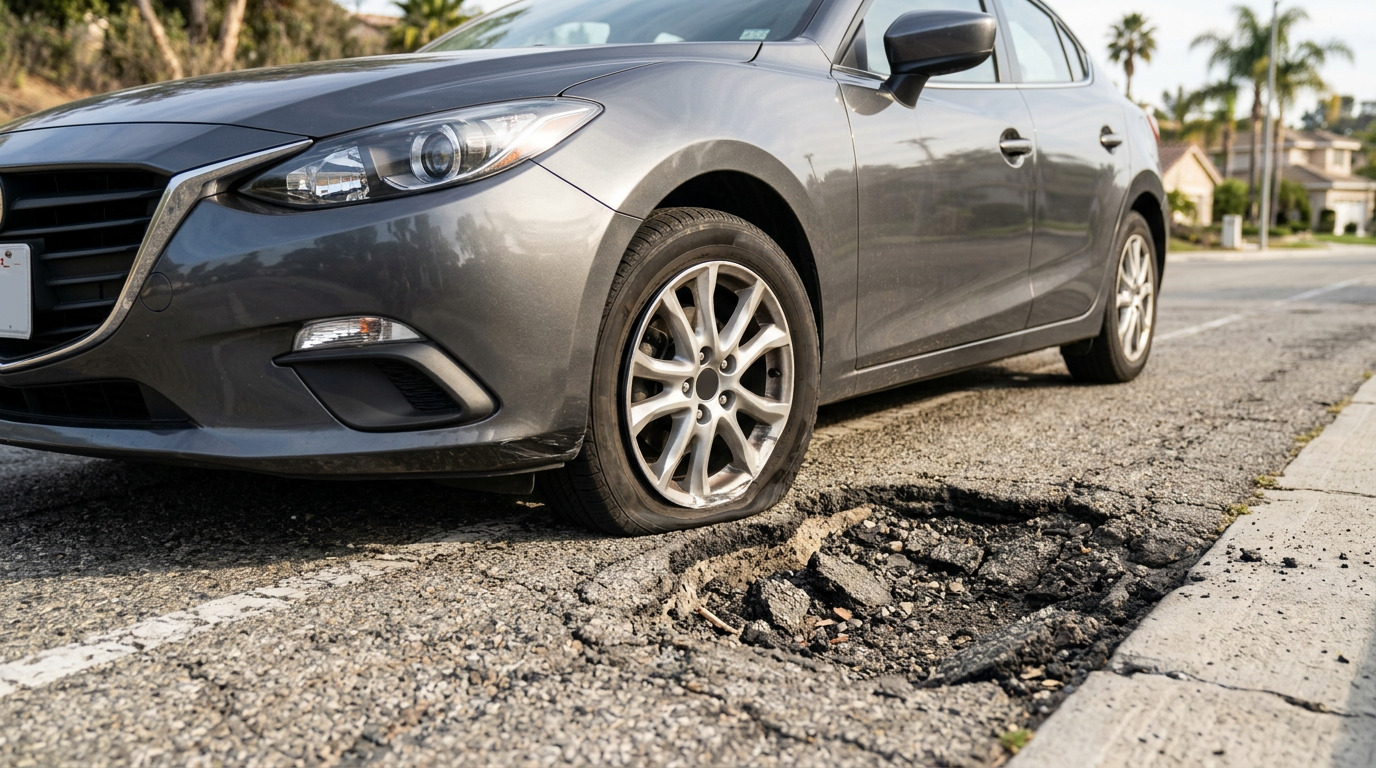
Pothole damage insurance can help California drivers manage unexpected vehicle repair costs. From cracked wheels to damaged suspension systems, road hazards can cause expensive problems. Flying debris can also damage windshields, bumpers, and other vehicle components.
However, not every auto insurance policy covers these incidents. The protection you receive depends on your coverage, the circumstances of the accident, and your deductible. Understanding how collision and comprehensive insurance work can help you make informed decisions before filing a claim.
Does Auto Insurance Cover Pothole Damage?
Potholes are a common concern for California drivers, especially after heavy rainfall. When water weakens pavement, deep holes can develop and create dangerous driving conditions. Fortunately, pothole damage insurance coverage is generally available through collision insurance. Collision coverage typically applies when your vehicle strikes an object or road hazard. Therefore, it may help pay for repairs resulting from hitting a pothole. Common examples of covered damage include:
- Damaged tires: A deep pothole can puncture a tire or damage its internal structure.
- Bent wheels: Strong impacts may bend or crack alloy wheels.
- Suspension damage: Potholes can affect shocks, struts, and other suspension components.
- Alignment problems: A severe impact may cause wheel misalignment.
- Undercarriage damage: Deep potholes can damage components beneath your vehicle.
However, coverage depends on your policy terms and the cause of the damage.
What If You Only Have Liability Insurance?
Liability insurance generally does not cover damage to your own vehicle. Instead, it helps pay for injuries or property damage you cause to others in a covered accident. Consequently, drivers with liability-only policies usually must pay for pothole-related vehicle repairs themselves. If you frequently drive on poorly maintained roads, adding collision coverage may provide valuable financial protection.
Does Comprehensive Insurance Cover Road Debris?
Road debris can cause serious damage, particularly on California highways and freeways.
However, whether comprehensive insurance applies depends on how the incident occurs.
When Comprehensive Coverage May Apply
Comprehensive insurance generally covers certain non-collision events, including damage caused by falling or flying objects.
For example, comprehensive coverage may apply when:
- A rock flies into your windshield.
- Debris falls from another vehicle and strikes your car.
- A falling object damages your hood.
- Flying debris breaks a side window.
These incidents may qualify because the object strikes your vehicle rather than your vehicle colliding with an object already on the road. Nevertheless, the final coverage determination depends on your insurer and policy.
When Collision Coverage May Apply
Collision insurance is more likely to apply when your vehicle strikes debris already lying on the roadway.
Examples include:
- Driving over a discarded tire.
- Hitting a fallen branch on the road.
- Striking a large object in your lane.
- Running over construction materials.
The distinction between moving and stationary debris can influence how insurers classify a claim. Therefore, documenting the circumstances of the incident is important.
What Types of Road Hazard Damage Does Insurance Cover?
Different road hazards can affect different vehicle components. Understanding these risks can help you determine which coverage may apply.
1. Tire and Wheel Damage
Potholes can damage tires, bend rims, or cause sudden air loss. Collision insurance may cover these repairs when the damage results from a covered impact. However, normal tire wear, deterioration, and routine maintenance are generally excluded.
2. Suspension and Alignment Damage
A severe pothole impact can damage suspension components or affect wheel alignment. These repairs can become expensive, particularly when multiple components require replacement. Collision coverage may help pay for qualifying repairs after the deductible.
3. Windshield Damage
Flying rocks and debris can crack or shatter windshields. Comprehensive insurance often covers this type of damage. Some policies also offer separate glass coverage or different deductible arrangements. Therefore, reviewing your policy can help you understand your windshield protection.
4. Bumper and Undercarriage Damage
Large debris and deep potholes can damage bumpers, exhaust systems, and other components beneath your vehicle.
Collision insurance may cover these repairs when the incident qualifies as a covered collision.
However, mechanical failures unrelated to a covered accident are generally excluded.
When Should You File a Pothole Damage Insurance Claim?
Filing an insurance claim is not always the most economical decision.
Before submitting a claim, compare your estimated repair costs with your deductible.
Your deductible is the amount you pay toward a covered repair before insurance contributes.
For example, consider the following situation:
- Total repair cost: $1,800
- Collision deductible: $500
- Potential insurance payment: $1,300
In this example, filing a claim may help reduce your immediate repair expenses.
However, if the repair costs only $450, a $500 deductible would generally leave you responsible for the entire amount.
Could Filing a Claim Increase Your Premium?
Insurance claims can sometimes affect future premiums.
However, California has specific rules governing how insurers determine auto insurance rates.
A claim does not automatically mean your premium will increase. The outcome depends on factors such as fault determination, applicable regulations, and your insurer’s rating practices.
Before filing, consider asking your insurance agent how the claim process works and what information you should review.
How to Document Pothole or Road Debris Damage
Proper documentation can make the insurance claims process easier.
If your vehicle suffers damage from a road hazard, follow these steps.
Step 1: Move to a Safe Location
If possible, move your vehicle away from traffic before inspecting the damage.
Avoid continuing to drive if you suspect serious tire, wheel, or suspension problems.
Step 2: Photograph the Damage
Take clear photographs of the affected vehicle components.
If conditions are safe, document the pothole or debris involved in the incident.
Step 3: Record the Location
Write down the street, highway, or intersection where the incident occurred.
Include the approximate time, date, and driving conditions.
Step 4: Obtain a Repair Estimate
Visit a qualified repair facility to determine the extent of the damage.
A professional inspection can also identify problems that may not be immediately visible.
Step 5: Contact Your Insurance Provider
Notify your insurance company and explain what happened.
Your insurer can review your coverage, deductible, and available claim options.
Following these steps can help you provide accurate information throughout the process.
Can California Drivers Request Reimbursement for Pothole Damage?
In some circumstances, California drivers may be able to pursue reimbursement from the public agency responsible for maintaining a roadway.
However, these requests are separate from auto insurance claims.
Eligibility depends on several factors, including:
- Which government agency maintains the road.
- The circumstances surrounding the damage.
- Available evidence of the hazardous condition.
- Whether the agency may be legally responsible.
- Applicable claim procedures and filing deadlines.
For example, damage occurring on a state highway may involve a different agency than damage occurring on a city-maintained street.
Additionally, government liability is not automatic simply because a pothole caused damage.
Drivers should identify the responsible agency and review its official claim procedures before submitting a request.
How Can You Prevent Pothole and Road Debris Damage?
Although road hazards are not always avoidable, preventive driving habits can reduce your risk.
Maintain Proper Tire Pressure
Check your tire pressure regularly and follow your vehicle manufacturer’s recommendations.
Proper inflation can help tires perform as intended when encountering uneven pavement.
Keep a Safe Following Distance
Maintaining adequate distance from other vehicles gives you more time to identify road hazards.
It may also reduce your exposure to debris thrown by vehicles ahead.
Reduce Speed on Damaged Roads
Driving at appropriate speeds can reduce the severity of certain pothole impacts.
Pay particular attention to construction zones, poorly maintained streets, and roads affected by heavy rainfall.
Inspect Your Vehicle After an Impact
If you hit a deep pothole, check for unusual vibrations, steering problems, or visible tire damage.
Seek a professional inspection when necessary.
Review Your Auto Insurance Policy
Make sure you understand the difference between collision and comprehensive coverage.
Both can provide valuable protection, but they address different types of incidents.
Reviewing your deductibles and coverage limits can also help you prepare for unexpected repair expenses.
Is Pothole Damage Insurance Worth It in California?
For many California drivers, collision coverage can provide useful financial protection against pothole-related damage. However, whether the coverage is worthwhile depends on your vehicle’s value, repair costs, deductible, and financial circumstances. Comprehensive coverage can provide additional protection against flying debris and other covered non-collision incidents. Together, these coverages may help reduce the financial impact of unexpected road hazards. Before selecting a policy, compare available options and make sure the protection matches your driving needs.
Delgado’s Insurance: Dependable Insurance in California
If you need dependable and affordable insurance in the Golden State, look no further than Delgado’s Insurance. We have locations in Riverside, California, and Bloomington, California. Get in touch today by telephone (951-361-0084, 909-421-9003), email (mail@delgadosinsurance.com), or through our social media accounts (Facebook, Twitter, and LinkedIn)!